King Tides cause flooding along both U.S. coasts

Record-breaking tides are swamping both coasts of the U.S., and in some places water levels have climbed higher than they did during some historic hurricanes.
A mix of naturally high tides, rainfall, and onshore winds is lifting ocean levels feet above normal. Flooding reached 2.25 feet above normal in South Port Everglades on Monday, surpassing the record set by Hurricane Nicole in 2022.
Coastal flood alerts remain in effect for the entire east coast of Florida, Georgia, and South Carolina, as well as most of the west coast along California, Washington, and Oregon. Officials are warning of water over low-lying roads, possible sewage backups, and severe beach erosion.
The coasts are experiencing the highest natural tide of the year, nicknamed the "King Tide." The more official name is a perigean spring tide, one of several that occur annually.
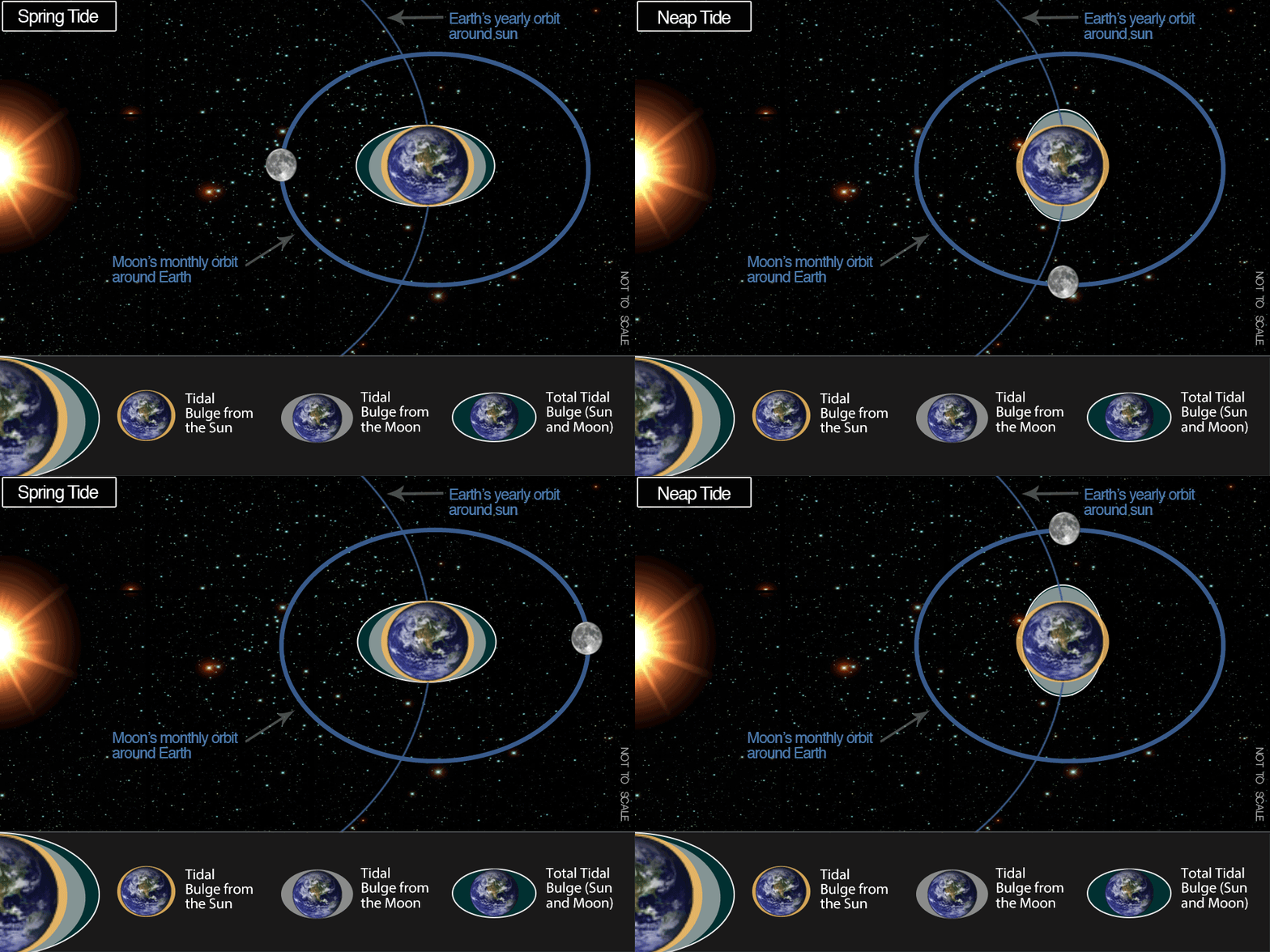
Despite the name, spring tides have nothing to do with the season. NOAA says to think of the tide "springing forth" during the new or full moon, when the Earth, Moon, and Sun line up.
Both the Sun and the Moon pull on Earth's oceans, though the Moon exerts about twice as much force. When the three are aligned, as they are during a new or full moon, their combined pull stretches the tides to higher highs and lower lows than usual.
To make things more complicated, the Moon's path around Earth, like Earth's path around the Sun, is an oval rather than a perfect circle, so the Moon swings closer to us at some points and farther away at others. The closest point is called perigee.
Every so often, perigee lines up with a new or full moon. That's the same setup behind "supermoons," which look larger in the night sky. It also produces the strongest tidal pull of the year, and it happens about 6 to 8 times annually.
A low pressure system south of Florida is also drawing moisture-heavy air onto the state's east coast, helping push water toward the shoreline. Forecasters expect more than 2 inches of rain in the coming days, which will make drainage in already-saturated areas even harder.
The peak of the King Tide should hold for another day or so. Once the astronomical alignment breaks down, water levels are expected to gradually subside.
