Rare celestial rings appeared over Mid-Mo during the October hunter moon

Night owls in Mid-MO got to see a spectacular view on Sunday night thanks to a few clouds and the timing of the full moon.
If you were out catching a glimpse of the Hunter Moon (the full moon that occurs in the month of October), another striking feature in the night sky quickly stood out.
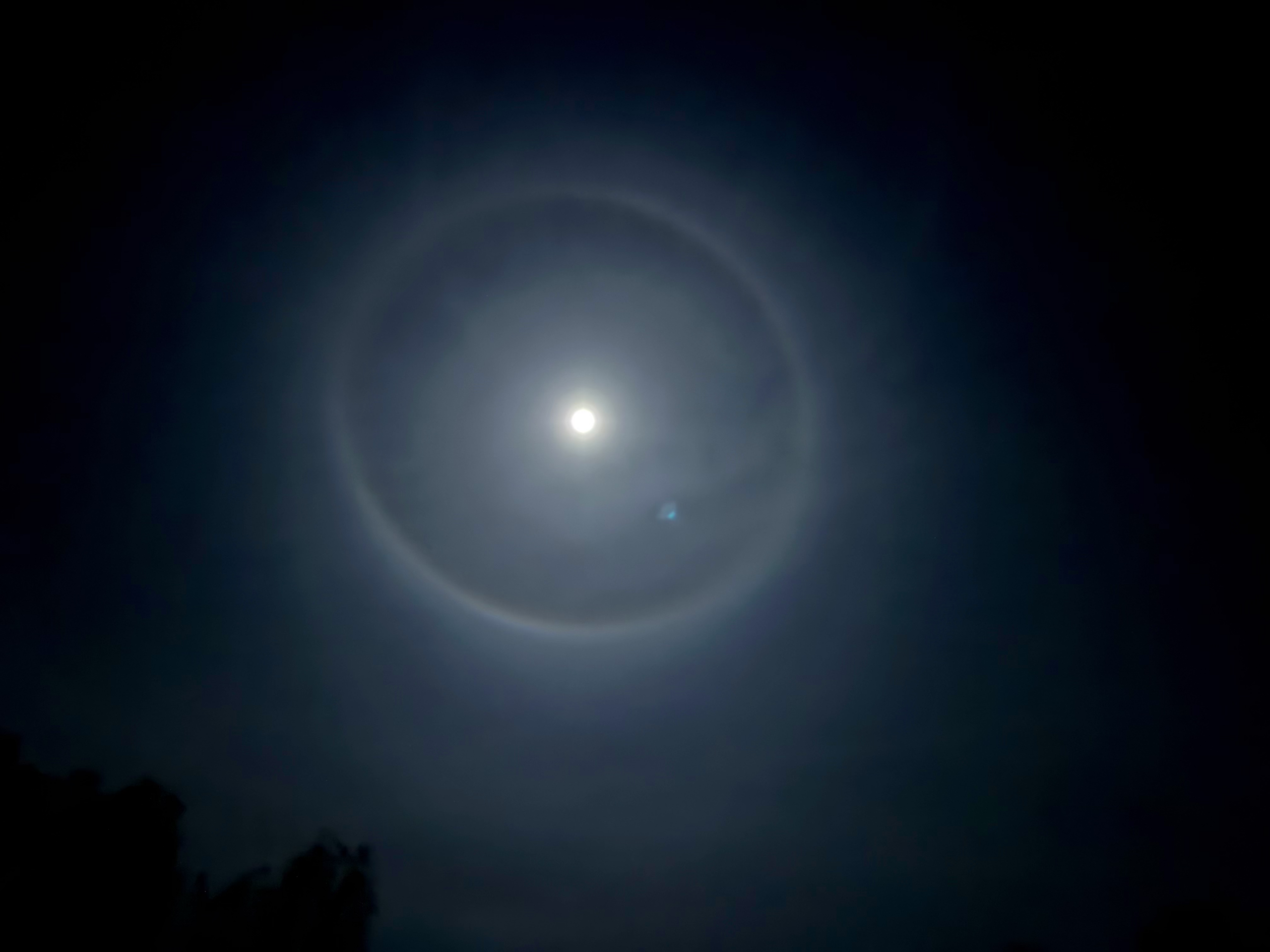
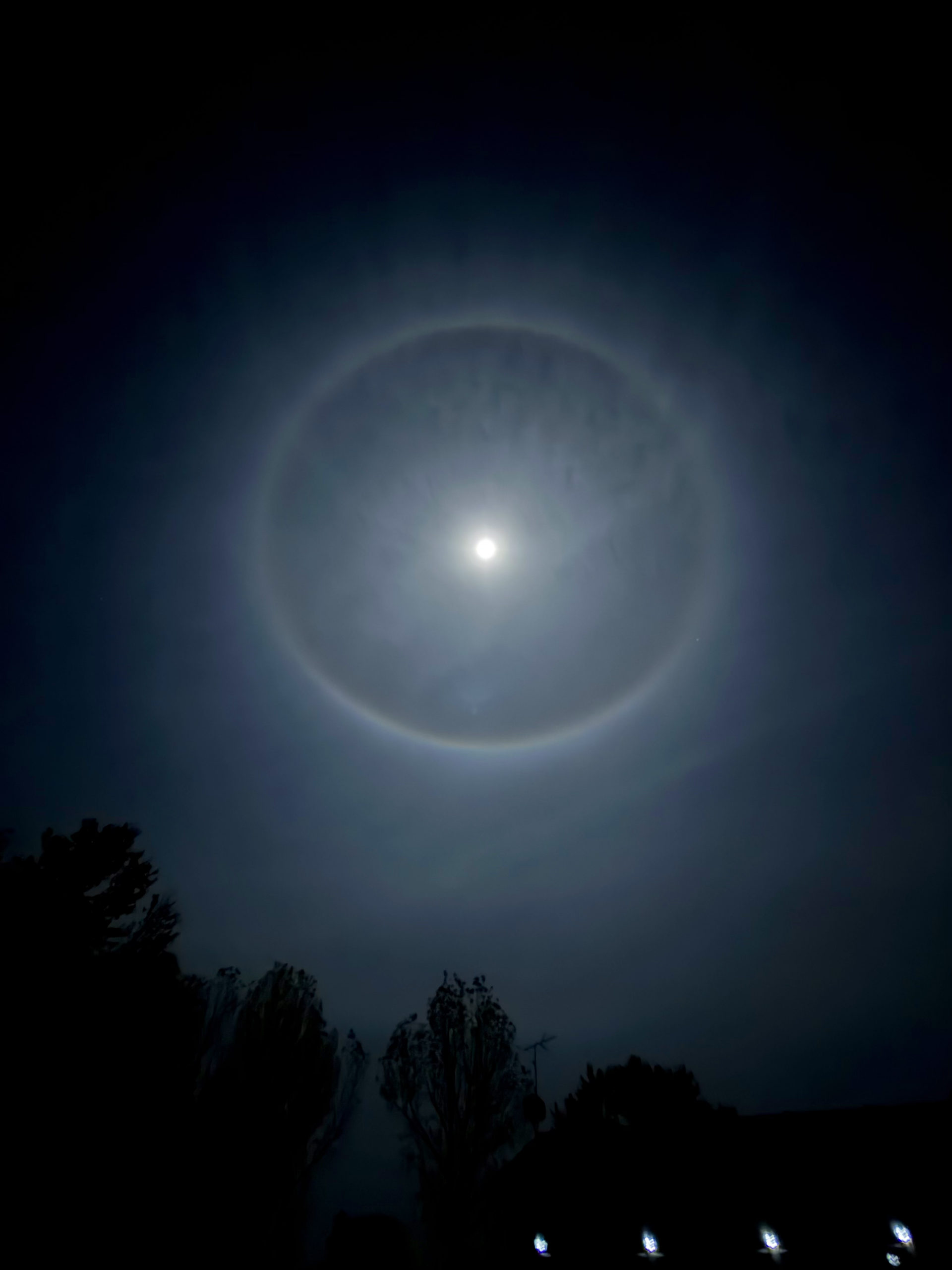
A brilliant milky-white halo encircled the moon most of the night, and a lucky few may have been able to see a second, fainter ring that intersected the moon. These circles are a rare sight, and scientists know what causes them.
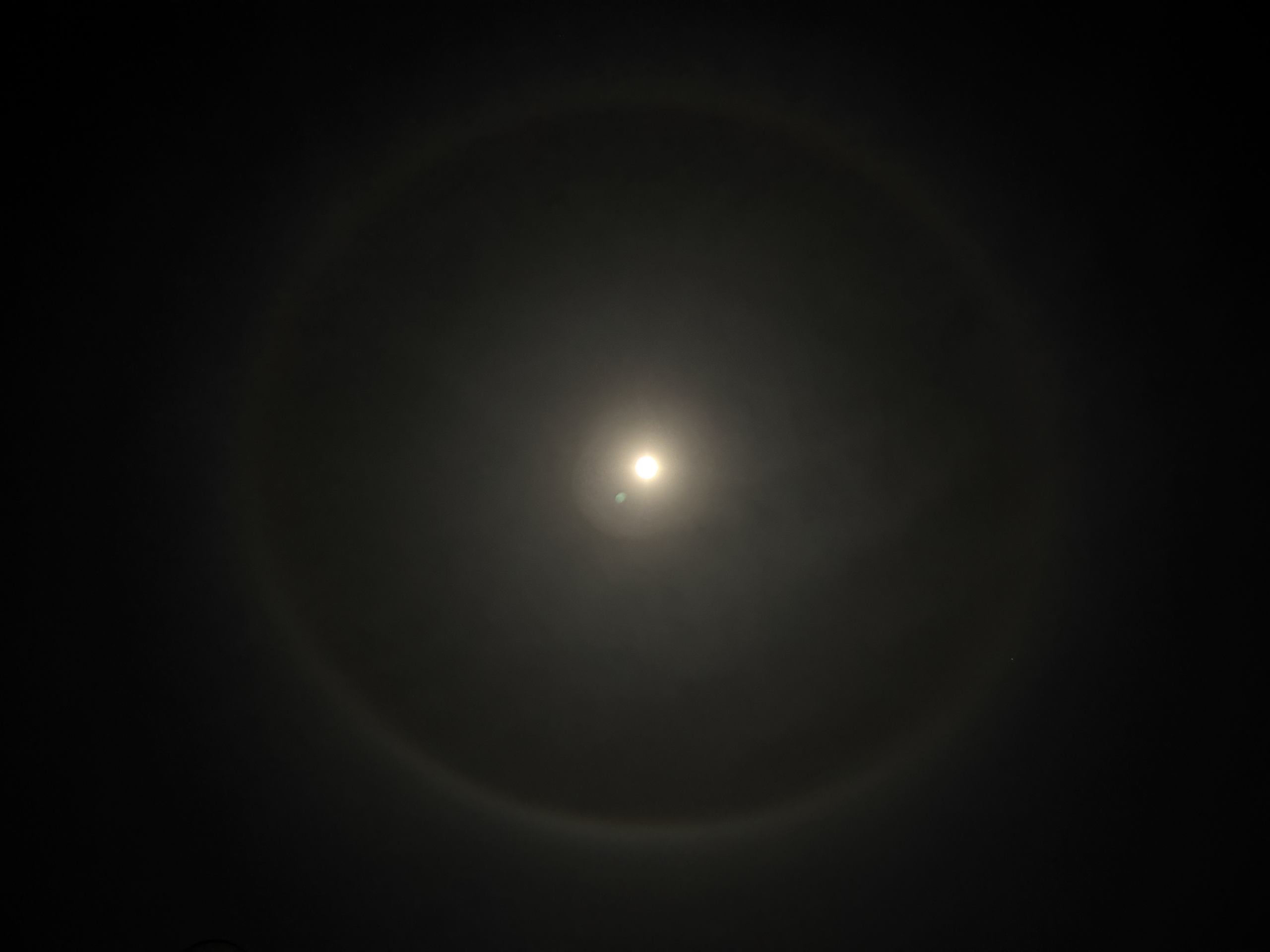
The bright halo around the moon has several names: a moon ring, lunar halo, winter halo, and 22° halo. The 22° figure comes from its position in the sky—it has a radius approximately 22° around the moon. That's roughly equal to the length of your outstretched hand.
We didn't see it in Mid-MO Sunday night, but a larger and rarer 46° halo also sometimes appears, which is about a full arm's length around the moon, and much larger than a single photo can capture.
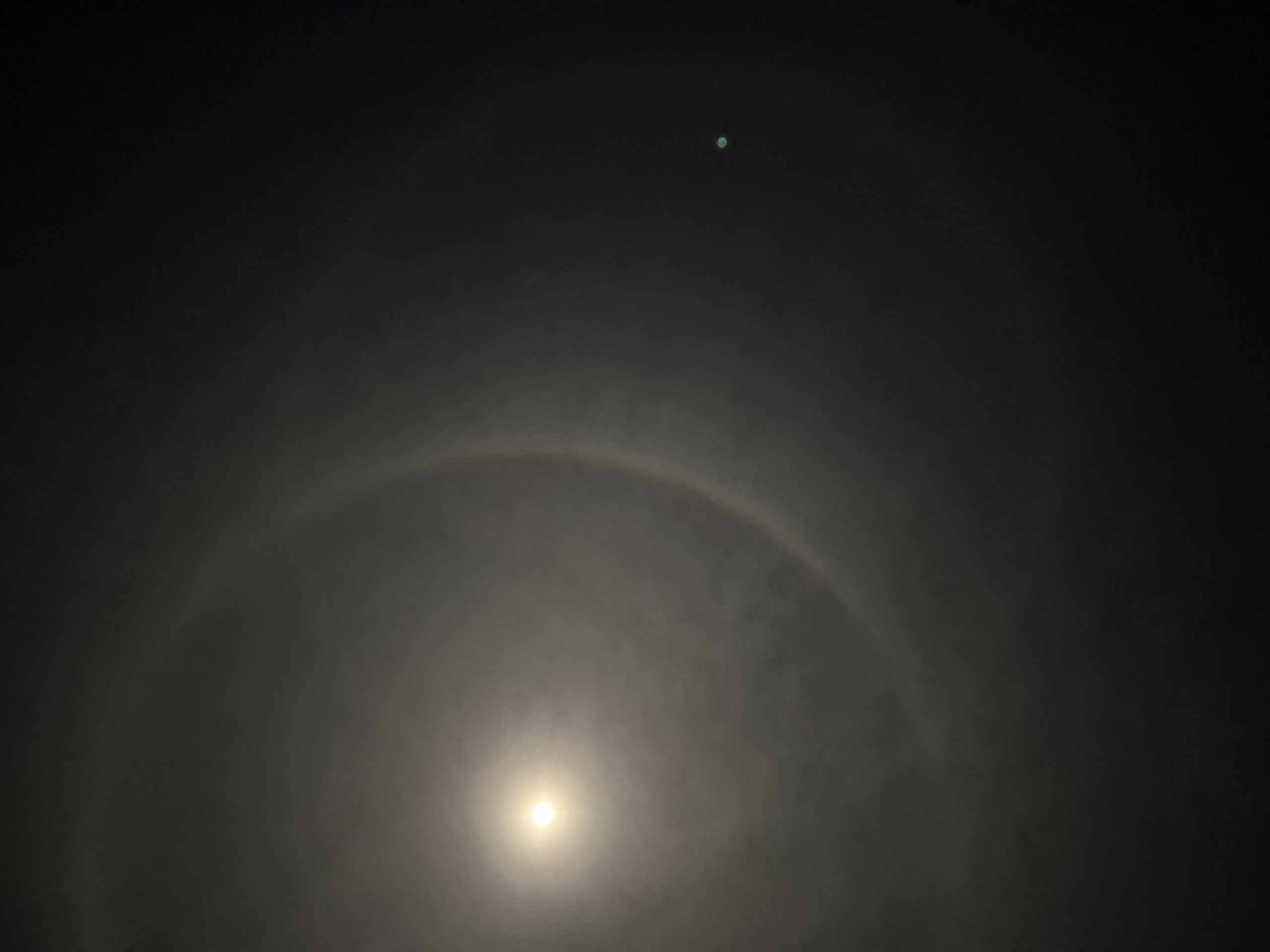
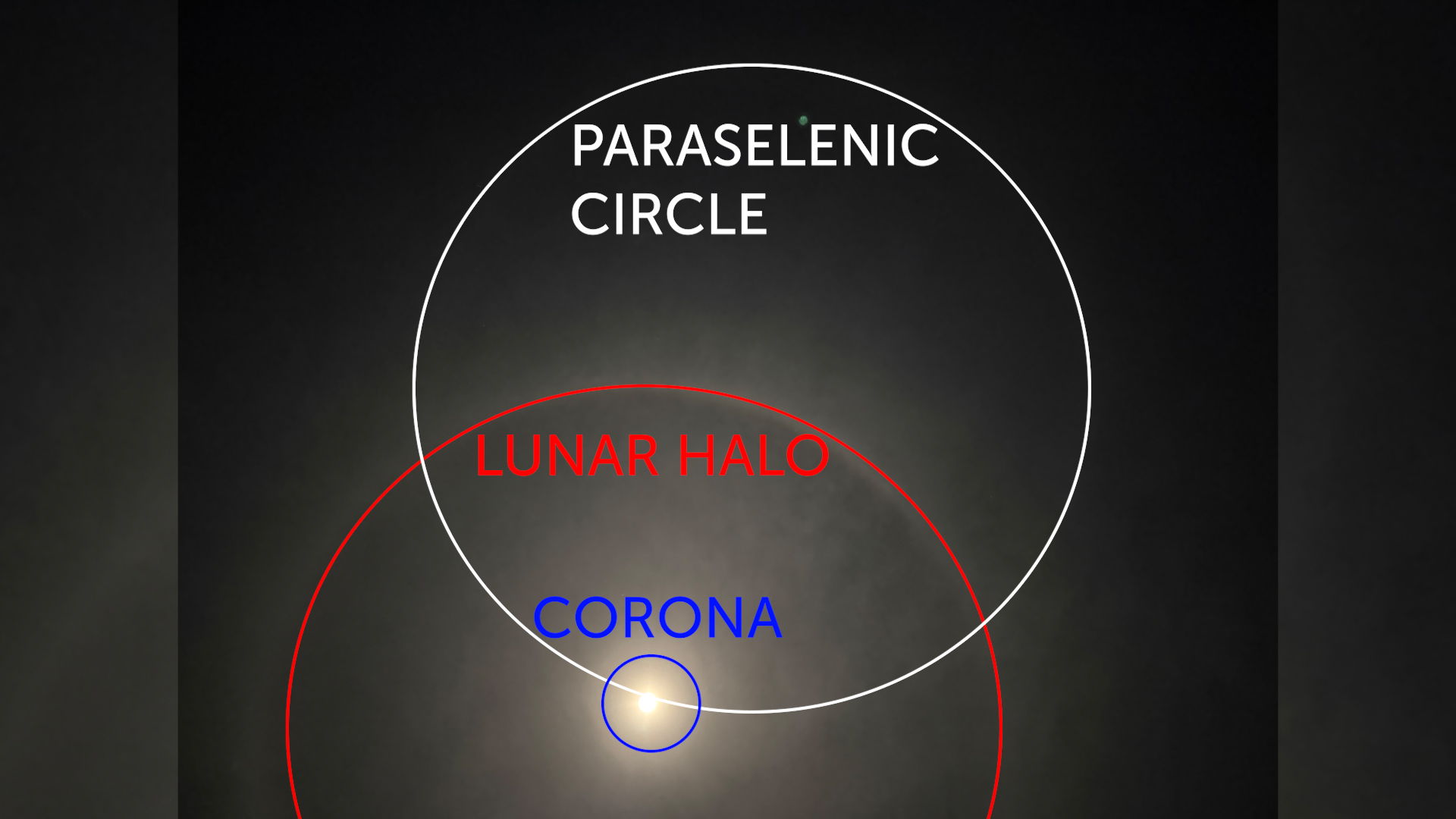
We did, however, see another rare circle in the sky, called a paraselenic circle. That name is given to the ring that intersects the moon instead of encircling it. Most of the time it's only visible in pieces, but Mid-MO had a full 360-degree view on Sunday.
A corona may also have been visible around the moon. The corona is much smaller and appears like a colorful glow or fuzz around the moon, and is caused by the presence of water droplets in the atmosphere.
The halos were made possible by the quiet conditions we've been seeing recently, with a little help from some clouds. Lunar halos occur when light passes through ice crystals in cirrus or cirrostratus clouds about 4 to 8 miles above the surface. The ice crystals act like prisms and deflect light at a 22° angle, causing the halo.
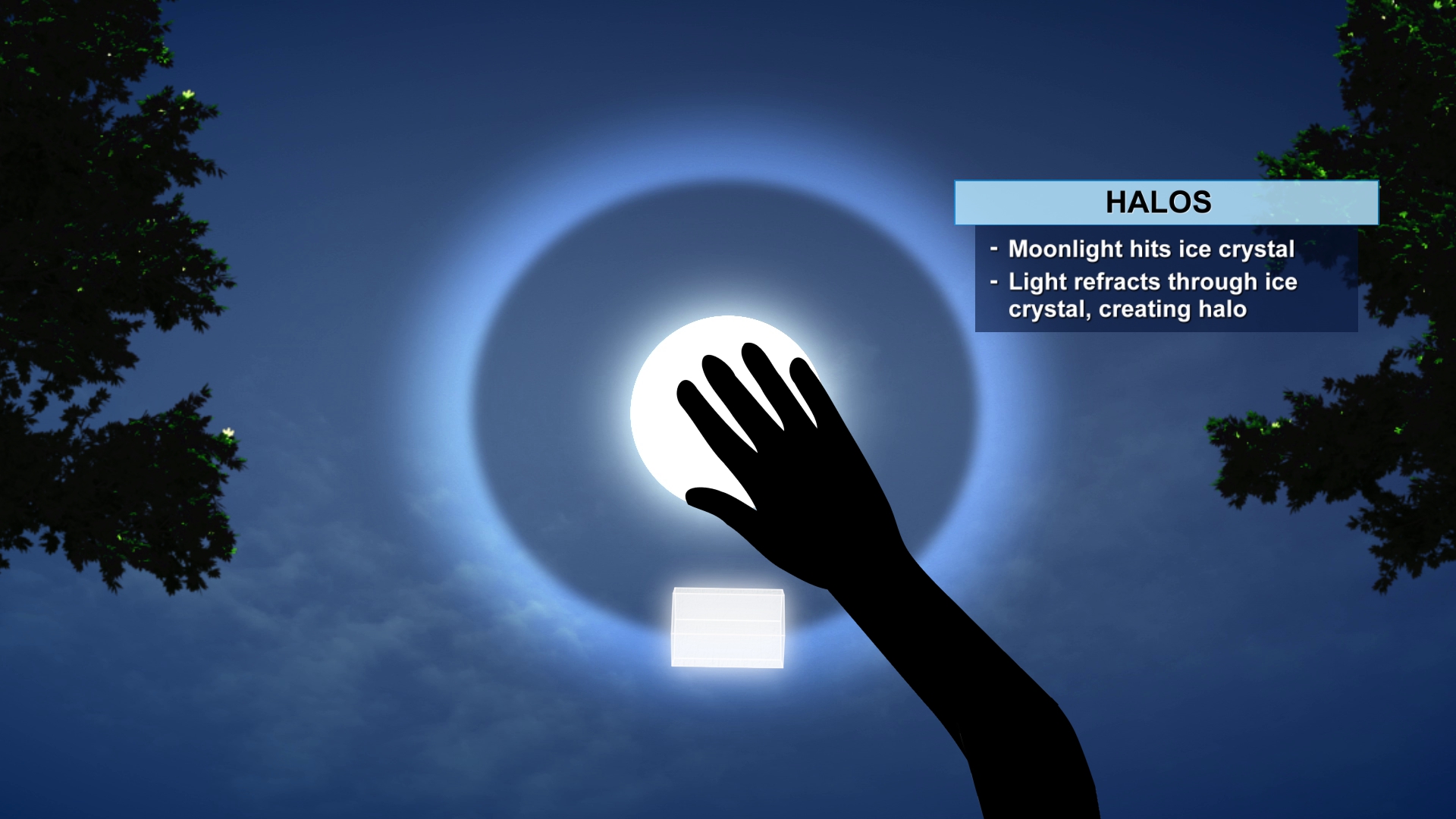
Scientists still debate the specifics, but the leading theory is that these crystals are hexagonal and randomly oriented in the sky. The exact angles that produce the halos involve some complicated math, but in short, any angle below 22° does not reflect to the ground, which is why the sky darkens between the halo and the moon.
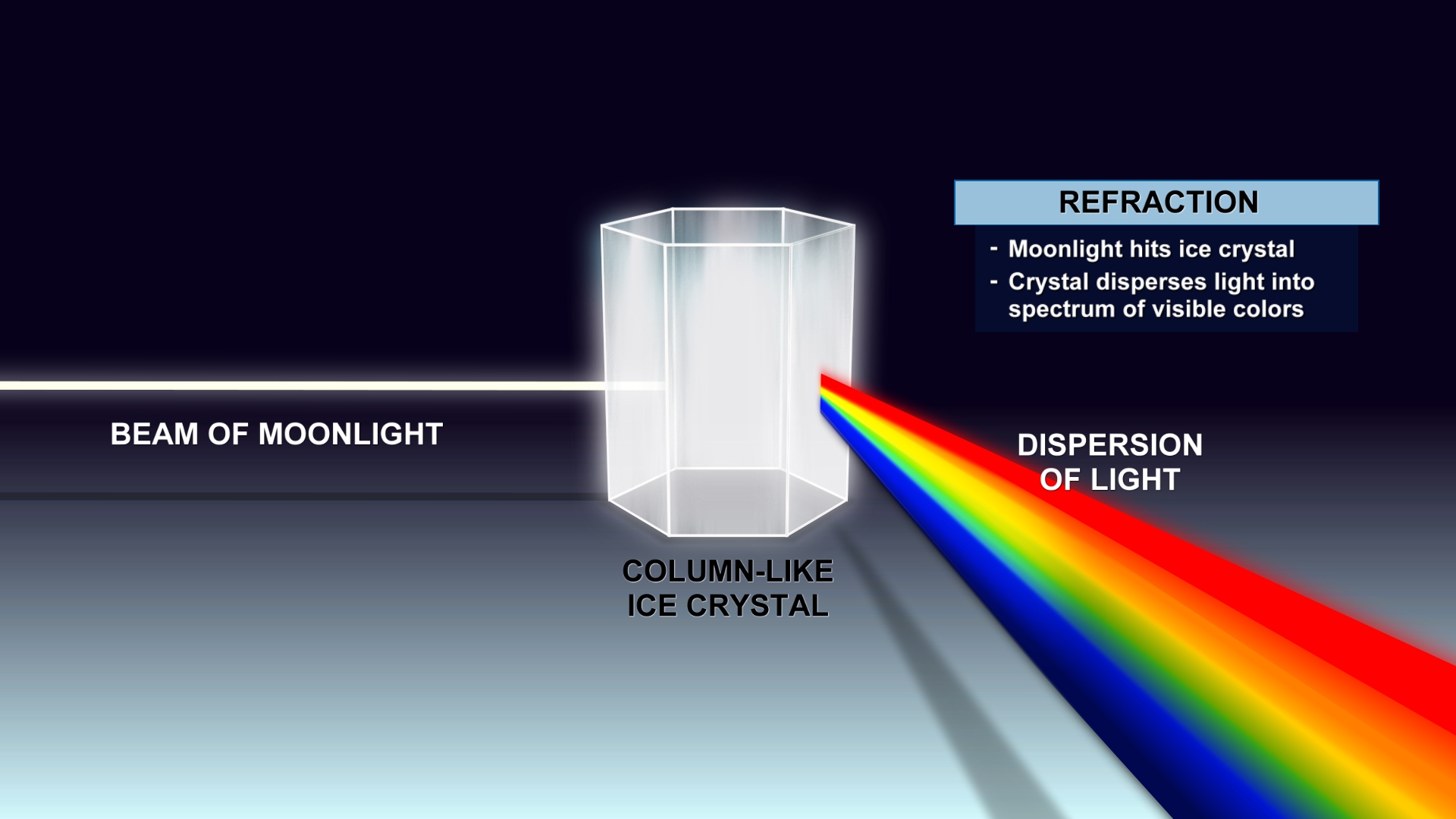
The paraselenic circle is thought to appear when the hexagons are oriented vertically, which requires very calm conditions. However, physics tells us the hexagons should orient themselves horizontally instead, so experts still debate these mechanisms.
An old wive's tale says that lunar halos appear about a day or two before an approaching front or low pressure system. There is a small nugget of truth there; cirrus clouds can often roll in days before a front arrives.
Indeed, Mid-MO is expecting a weak system to move through the area on Tuesday, though rain chances are little to none. But cirrus clouds can also occur any time without an accompanying storm system.
The moon will officially enter its waning gibbous phase tonight, at 99.5% illumination, bright enough for another display of halos, but clouds will generally be thicker Monday night, which could obscure the rings.
