Warming winters are changing hardiness zones, but warming summers may have a bigger impact on your planting decisions this spring

It already smells like spring in the greenhouse at CMSE's giving gardens. Their greenhouse is one way the organization provides meaningful employment to individuals with disabilities, but it's also where those employees have already prepared perennials to go in the ground across Mid-Missouri later this spring.
“A perennial is basically a plant that has a good chance of surviving winter and coming back the next year in its own right.”
Greenhouse Manager, Brian Lee, says perennials are defined by designated plant hardiness zones, or basically, where a plant can survive a region’s average annual extreme minimum winter temperature.
Because of this, he says what qualifies as a perennial elsewhere won’t necessarily qualify here. Mid-Missouri is divided into two zones: 6a and 6b. Plants in these zones have to be able to survive winters with nights as cold as -6 to -3 °F
Lee says ferns are an example of a tropical plant that can’t survive that kind of cold, even though they are considered perennials in the south.
“They're almost certain not to make it here. If you get one as a fluke and it comes through one winter, you probably won't get a second winter.”
So what plants should you look for if you’re sprucing up your yard this spring?
“Zinnia and Marigold are pretty hard to beat,” says Lee.
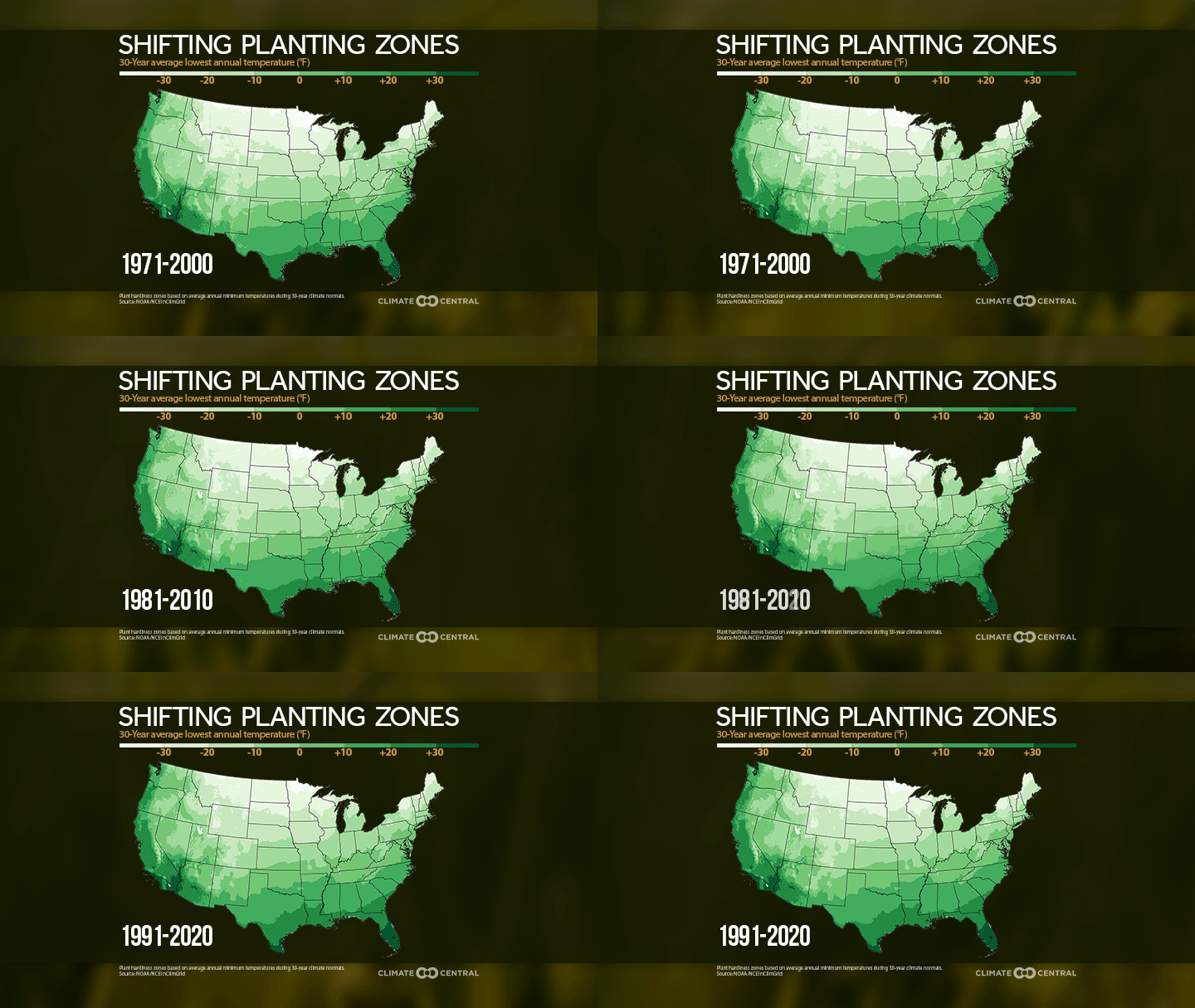
In the future, plants and insects that aren’t expected to survive the winter in mid-Missouri may someday be able to. Climate Central analyzed data from 1951 to 2024, and found that Columbia specifically has already shifted from zone 6a to 6b over this time period. This is a small step in a warmer direction. This analysis projects average coldest winter lows to increase to nearly 4°F from 2036 to 2065.

This won’t impact the plants you select this spring, but it’s a trend that’s tied to another that could impact the amount of plants you select.


We don’t usually think of heat as a severe element to prepare for in spring, but Lee says trends of more extreme and prolonged heat should have you considering how much work you’re setting yourself up for later this summer.
“Homeowners have to be really on the watch to try to get the plants enough water, because the rain will not do it.”
A change in our plant hardiness zones doesn't mean that you can go out and get an exotic plant for your yard just yet, but with warmer temperatures and warmer summers, it may mean that the plants you do have may need watering more often, and that may mean more work for you.
