How much does landlord insurance cost?


The cost of landlord insurance for a small office building in a quiet suburb could look very different from a mixed-use property downtown. There’s no single price tag for landlord insurance costs because of the numerous factors insurers use to calculate a policy premium based on your rental property’s specific age, construction, location and level of risk. The best way to know for sure exactly what you’ll pay to insure your property is to get a free landlord policy insurance quote online in about 10 minutes.
When we talk about landlord insurance, that’s not usually a single policy. Protection for landlords (often called lessors in insurance terms) and their property is often a combination of different types of coverage to cover different risks, such as liability, property damage and loss of rental income. This aspect of insurance for your rental property can make pricing look very different from one property owner to the next.
ERGO NEXT broke down what tends to affect insurance pricing, the types of coverage many landlords carry and a few practical ways you may be able to keep costs in check.
What factors affect landlord insurance costs?
Insurance companies primarily look at two things: the property itself and the amount of coverage you seek. That’s why two landlords with similar-looking buildings can end up paying very different amounts for insurance.
Sometimes the difference comes down to location, while other times it’s the tenants, the building’s age or a history of previous claims. Generally, properties that have more opportunities for damage, lawsuits or expensive repairs tend to cost more to insure.
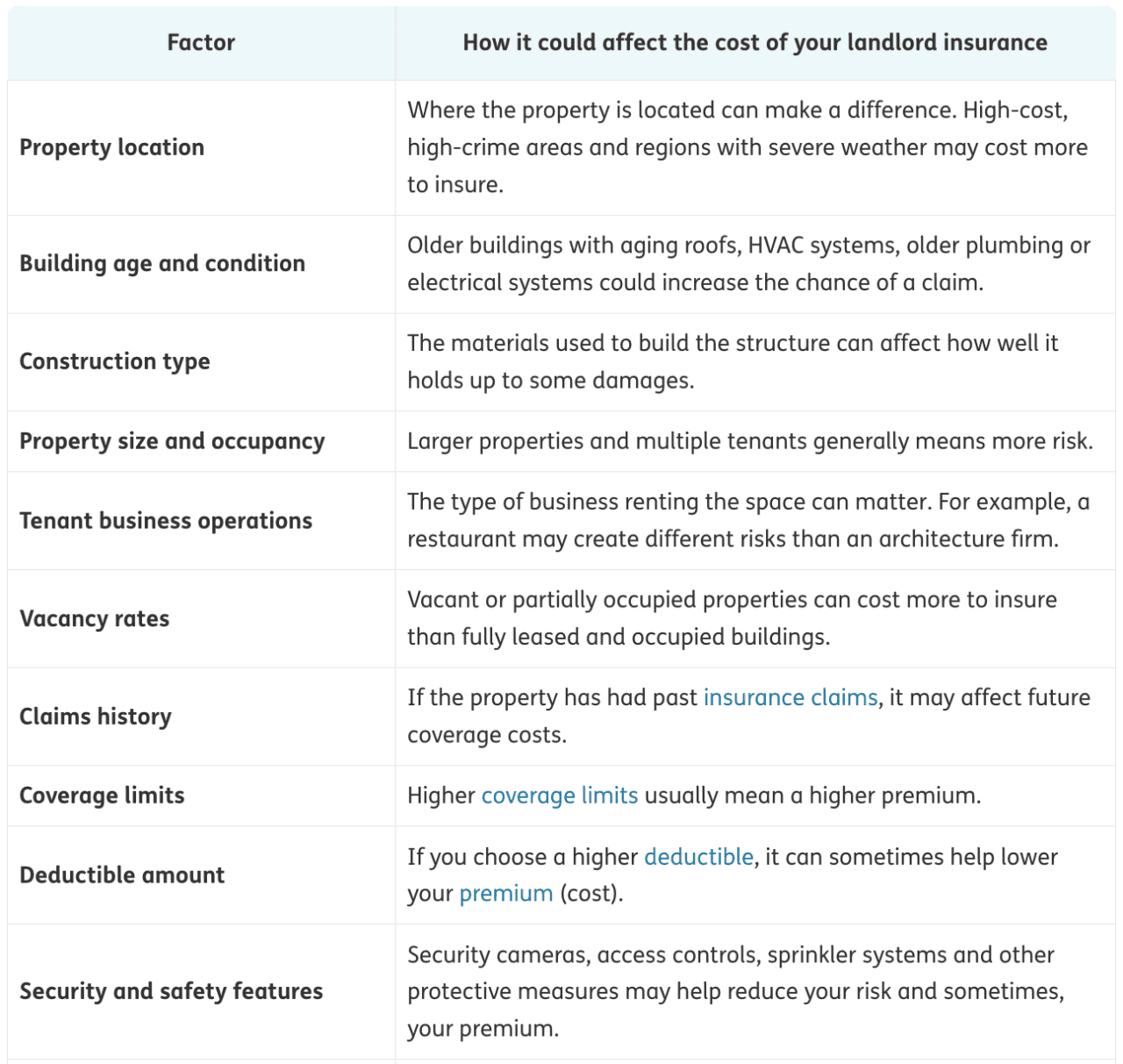
Here’s a look at some of the biggest factors that can affect commercial landlord insurance costs:
Which types of business insurance could commercial landlords benefit from the most?
A couple types of business insurance are the best fit for many commercial landlords. These include:
Business Owner’s Policy (BOP insurance)
For many commercial property owners, a Business Owner’s Policy, also called BOP insurance, is the first policy they buy.
A BOP combines two important types of coverage into a single policy that’s often more cost-efficient than buying two separate policies.
- General liability insurance. This coverage could help cover medical costs for non-employees injured in your property, property damage claims for damages to property that doesn’t belong to you and some legal costs. For example, if a visitor slips in your building’s parking lot or other common area, or suffers an injury and needs medical care and then files a claim, this coverage could help cover some of the associated medical costs and legal fees that might follow.
- Commercial property insurance. This policy could help cover costs after damage to the building structure that’s not specific to your tenant spaces, such as damages to stairwells, elevators, outside walls, lobbies or other common areas. A few examples of covered events include fire, storms damage or damages from a burst water pipe. Commercial property coverage can also help cover your lost rental income if you have to remove tenants for repairs.
Because a BOP bundles these coverages together, it’s often more convenient managing two policies separately.
Cyber Liability insurance
Landlords often run part of their business through apps and online platforms, including tenant payment systems and vendor and maintenance communications. This means you could be storing sensitive financial data and private contact information for everyone in your business network. And if that data becomes compromised, you could be held responsible.
Cyber liability insurance, also called cyber insurance, could help cover costs related to data breaches, cyberattacks and other technology-related incidents.
Other types of insurance coverage for landlords
Landlords may also want additional coverage, such as:
- Workers’ compensation insurance, which may be required if you have employees who help maintain or manage the property.
- Commercial flood insurance, which could help cover flood-related damage that isn’t covered by standard property insurance.
How the coverage you choose can affect the cost of your landlord insurance
The property matters, but so do the coverage decisions you make. Two landlords with nearly identical buildings may still end up with very different premiums if one chooses broader coverage or adds extra protection.
Some of the biggest coverage-related factors include:
- Coverage limits: Policies with higher coverage limits usually cost more because they can help cover larger losses.
- Deductibles: Choosing a higher deductible can sometimes lower your insurance premium. The trade-off is that you’ll generally pay more out of pocket if you need to file a claim.
- Additional coverages: Add-ons, called insurance endorsements, can increase your overall costs, but they may also provide protection against risks that aren’t in a standard policy. For example, landlords may choose to add endorsements for:
- Building code upgrades after a covered loss (often called ordinance or law coverage).
- Additional insured endorsements.
- Commercial umbrella coverage for added liability protection.
- Specialized coverage for risks such as floods, earthquakes and wildfires.
More coverage usually means a higher premium. The trick is finding a balance between cost management and protection.
5 ways landlords may be able to lower their property insurance costs
No guarantees, but there are a few steps that could help reduce your premium over time.
1. Bundle coverage whenever possible
Many landlords have more than one type of insurance. Bundling coverages through product offerings like a BOP can be more cost-effective than buying separate policies.
2. Consider a higher deductible
A higher deductible can sometimes lower your premium. Just make sure it’s an amount you’d be comfortable paying if you need to file a claim.
3. Stay on top of property maintenance
Sometimes small problems turn into larger, more expensive ones. Keep up with roof repairs, plumbing issues, electrical systems and other routine maintenance to help reduce the likelihood of future claims.
4. Invest in security and safety features
Security cameras, alarm systems, access controls and outdoor lighting can help make a property safer. Depending on the property and insurer, these improvements could affect your monthly or annual pricing.
5. Review your coverage regularly
Properties change over time. You may add tenants, renovate a building or change how a space is used. Review your coverage annually to help ensure you’re paying for the protection you need and not carrying coverage that no longer fits.
This story was produced by ERGO NEXT and reviewed and distributed by Stacker.
